
Skip to content
  • Same-day service
  • Financing available
Spring Hill, FL (352) 555-0130
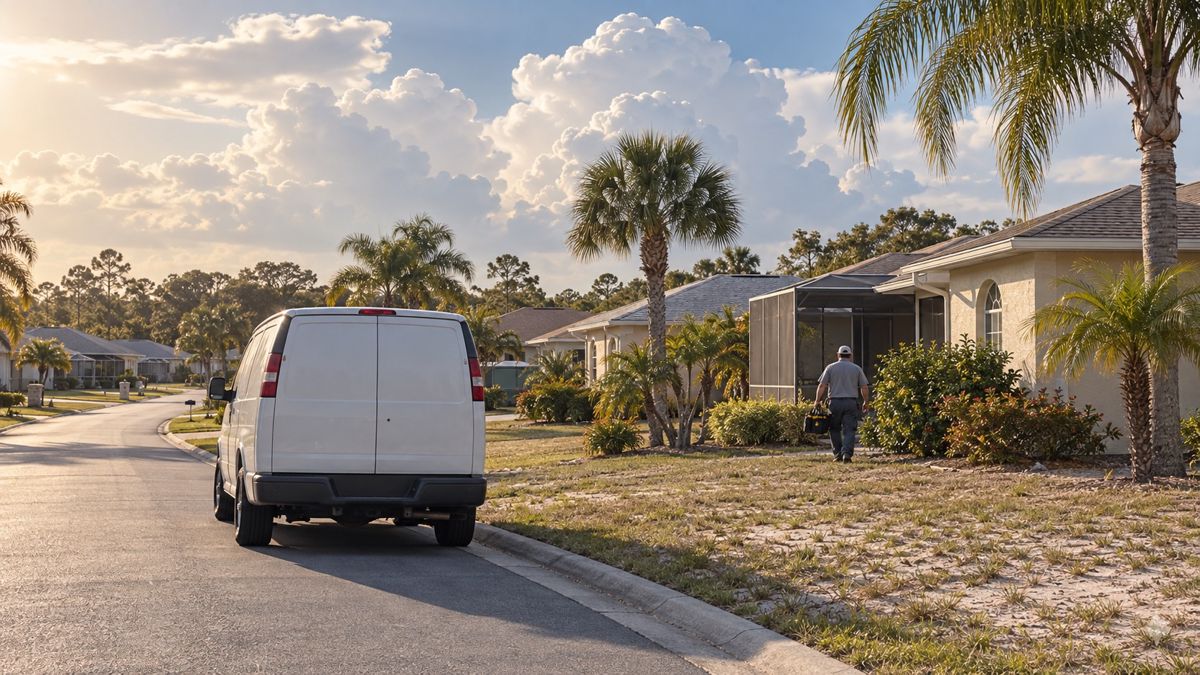
Stucco Florida homes on a sunny Spring Hill street with a service van

Larger homes and golf course lots

HVAC repair and replacement in Seven Hills, FL

Cooling and heating service for larger homes in the Seven Hills area. Send a quote request and we will confirm availability for your address.

  • AC repair and new AC installation
  • Heat pumps and seasonal tune-ups
  • Written quote before work begins
  • Same-day service
  • Financing available
  • Clear communication
  • Upfront pricing

Larger homes, longer duct runs and higher expectations

Seven Hills is a golf and residential area in the Spring Hill and Brooksville region, and many homes are larger than the typical block-and-stucco house nearby. Bigger floor plans, high ceilings, bonus rooms and more windows ask more of an HVAC system, and the equipment that serves them is often more complicated.

Common issues include one end of the house that never feels right, a second air handler that is working while the first rests, and humidity that lingers even when the temperature reads fine. In a house of this size, getting airflow to where it is needed matters as much as the unit's capacity.

Two systems, zoning and the tile roof overhead

Larger homes often run two or more systems, or one system with dampers and zones. Each adds parts that can fail: zone boards, motorized dampers, extra thermostats and long refrigerant lines. When one zone struggles, the culprit may be a stuck damper or a long duct run, not a failing compressor.

Roofs in newer subdivisions are often tile or shingle with deep eaves, and air handlers may sit in attics that reach high temperatures. Equipment up there works in a hot box, and high ceilings add volume that must be cooled. Newer homes also tend to be built tighter, which makes ventilation and humidity control a bigger part of comfort than in older houses.

Everything we offer Seven Hills homes

You will find all five services on the site, each with a dedicated page.

  • AC installation for single and multi-system homes, including load calculations that reflect large rooms and glass.
  • Heat pump installation for owners who want efficient cooling and gentle heating from variable equipment.
  • AC repair covering control boards, dampers, blower motors and refrigerant leaks.
  • HVAC maintenance that checks every system in the house, not only the one that complains.
  • Furnace repair for gas or electric heating equipment that serves a cooler wing or a bonus room.

Ask which of these fits your situation and we will point you to the right page.

When a system in a bigger house needs replacing, a straight swap is not always the answer. A proper plan looks at the house first.

  • Load calculation. Rooms, windows, insulation and orientation decide the capacity, not the old nameplate.
  • Staging. One system may be replaced now and another later.
  • Duct design. Long runs and tight bends cut airflow, even with new equipment.
  • Controls. Zoning, smart thermostats and humidity control add comfort and cost.

We explain the options in writing so you can see the difference each choice makes. A written plan helps you compare replacing everything with doing the job in stages.

Permits, community approvals and tidy workdays

Replacing air conditioning equipment is generally permitted work in Florida, and the contractor usually handles the application. Communities with architectural standards may also ask for approval on outdoor equipment placement, so check with your association early.

To keep the day easy:

  • Point out which air handler serves which part of the house.
  • Clear attic access in every location.
  • Protect flooring near entrances if you wish.

We also ask about any leak or odor history, since it can affect what we inspect. Larger homes often need more time on site, which we mention in the estimate.

From quote request to written estimate

We serve Seven Hills and surrounding areas but are not based there, so the request confirms we can reach you. Call (352) 555-0130 or use the form.

  1. Describe the complaint and which part of the house it affects.
  2. List how many systems the home has, if you know.
  3. Share photos of the labels on the outdoor units.
  4. We inspect each system and take notes on airflow.
  5. A written estimate follows, covering what we found and what we suggest.

Ask questions at any point, since a large house deserves a clear explanation of each part of the plan.

Get a quote in Seven Hills

Tell us what you need and we call you back.

Step 1 of 3

What do you need?

No obligation.

Questions about Seven Hills

Why does one part of my large house stay warm?

Common causes include long duct runs, a stuck damper, a weak blower, or a system that cannot keep up with sun-facing rooms. A technician can measure airflow and check controls before proposing a fix. Sometimes sealing or rerouting ducts helps more than replacing equipment. Balancing airflow is often the first thing we look at.

Can one system be replaced without touching the other?

Usually yes, if the equipment is independent. We check how the two systems share thermostats, ducts and controls first. Staging replacements can spread cost over time, although matched equipment may have advantages. We explain the choices in writing so you can choose. Check that thermostats and ducts are not shared before assuming a swap is simple.

What is zoning and do I need it?

Zoning uses dampers and thermostats to control temperature in separate parts of a house. It can help in homes with large open areas, bonus rooms or uneven sun. It adds parts that need care. We can say whether it makes sense for your layout. A technician can walk through your house and say whether it would help.

How do high ceilings affect AC sizing?

Tall rooms hold more air and can stratify, so the load is not found by square footage alone. A proper calculation considers volume, windows, insulation and sun exposure. Oversized equipment can short-cycle and leave the air damp, so bigger is not automatically better. A calculation done on site gives a better answer than any rule of thumb.

Do variable-speed systems make sense for a big house?

They can, since they run longer at lower output, which can improve comfort and humidity control. They also have more electronics to service. Whether the extra cost is worthwhile depends on your home and preferences, and we can discuss the tradeoffs without pushing a particular choice. Warranty terms differ by maker, so read them closely.